
What Is SWR? How to Tune a CB Antenna Safely
Published 16 May 2026. Last updated 26 September 2026.
SWR, or standing wave ratio, measures how much of your transmit power the antenna sends back down the coax instead of radiating it. A reading of 1.0 to 1.5 is excellent, 1.5 to 2.0 is usually acceptable, and above 3.0 you should stop transmitting and troubleshoot before you damage the radio.
If your CB radio has poor range, weak signal, interference or inconsistent performance, the problem is often not the radio itself. In many cases, the antenna system needs to be checked and tuned. This is where SWR becomes important.
In this guide, we explain what SWR is, why it matters for CB radio performance and how to tune your CB antenna safely using an SWR meter.
If you are setting up a new CB installation, you may also need: SWR meters, mobile CB antennas, coax cables, antenna mounts and CB radios.
What Is SWR?
SWR stands for Standing Wave Ratio. In simple terms, it measures how well your antenna system is matched to your CB radio.
When your CB radio transmits, power travels from the radio through the coax cable and into the antenna. If the antenna system is correctly matched, most of that power is transmitted efficiently. If the system is not matched well, some of the power is reflected back toward the radio.
A lower SWR reading usually means your antenna system is working more efficiently. A high SWR reading usually means there is a problem with the antenna, mount, coax cable, connector, grounding or tuning.
Why SWR Matters for CB Radios
SWR matters because it affects both performance and safety. A poorly tuned antenna can reduce your range, weaken your transmitted signal and make your CB setup unreliable.
More importantly, a very high SWR reading can cause too much power to reflect back into the radio. Over time, transmitting with a poor antenna match can put stress on the radio and may cause damage.
This is why checking SWR is one of the most important steps after installing a new CB antenna or changing your antenna mount, coax cable or vehicle setup.
Range depends on the whole aerial system rather than the radio alone, so it is worth reading our guide to how far a 27 MHz CB radio can reach and what changes that distance.
What Is a Good SWR Reading?
As a general guide, the lower the SWR, the better the antenna match.
- 1.0 to 1.5: Excellent reading. The antenna system is well tuned.
- 1.5 to 2.0: Usually acceptable for many CB installations.
- 2.0 to 3.0: The system may work, but it should be improved if possible.
- Above 3.0: Stop and troubleshoot before regular transmitting.
A very high SWR reading usually means something is wrong. Do not ignore it. Check the antenna, mount, cable, connectors and grounding before using the radio regularly.
A good SWR reading on a CB antenna is 1.0 to 1.5, which shows the antenna system is well tuned. Readings of 1.5 to 2.0 are usually acceptable, and 2.0 to 3.0 may work but should be improved if possible. Above 3.0, stop and troubleshoot the antenna, mount, cable, connectors and grounding before regular transmitting.
What Equipment Do You Need to Check SWR?
To check SWR on a typical CB radio setup, you will need:
- A CB radio.
- A CB antenna.
- An SWR meter suitable for CB frequencies.
- A short patch lead to connect the radio to the SWR meter.
- A suitable coax cable between the SWR meter and antenna.
If you do not already have one, browse our SWR meters category. You can also check our coax cables if you need a replacement cable or patch lead.
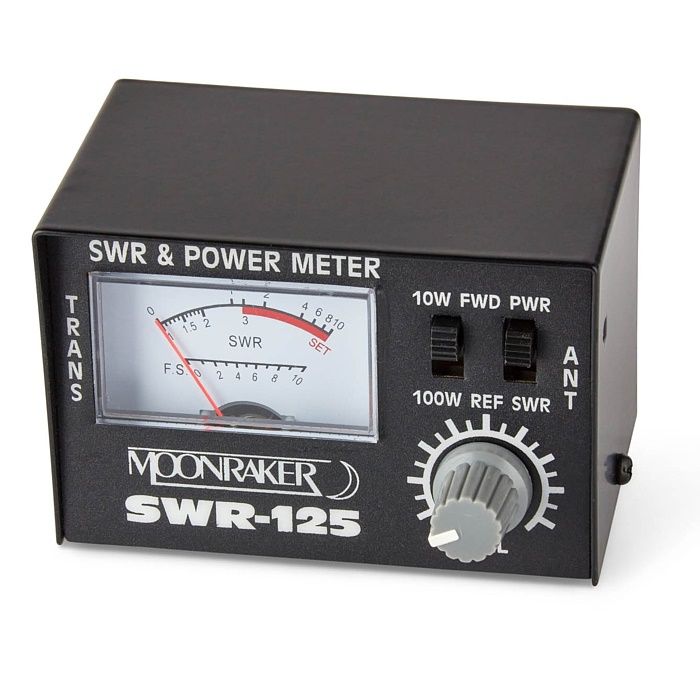
The cable between the meter and the antenna matters as much as the meter itself, and our guide to choosing coax cable for a CB radio compares RG58 with Mini8 and RG213 and the loss each one adds over length.
How to Connect an SWR Meter
The basic connection is simple:
- Connect the CB radio to the SWR meter using a short patch lead.
- Connect the antenna coax cable to the antenna side of the SWR meter.
- Make sure all connectors are tight and correctly fitted.
- Place the vehicle in an open area, away from buildings, trees and large metal objects.
- Check that the antenna is mounted securely before testing.

Always follow the instructions supplied with your specific SWR meter, as controls and calibration steps may vary between models.
How to Check SWR on a CB Antenna
A good SWR check should not be done on one channel only. You should normally compare readings on a low channel, a middle channel and a high channel. This helps you understand whether the antenna needs to be lengthened, shortened or checked for installation problems.
A typical check may include:
- Low channel: to see how the antenna performs at the lower end of the band.
- Middle channel: to check the general tuning point.
- High channel: to see how the antenna performs at the upper end of the band.
If the SWR is low across the band, your antenna setup is likely well matched. If it is high on all channels, the issue may be grounding, coax, connectors or mounting rather than antenna length alone.
How to Tune a CB Antenna
Many mobile CB antennas can be adjusted by changing the length of the whip or tuning section. The goal is to find a good SWR balance across the channels you use.
As a general rule:
- If SWR is higher on the lower channels than the higher channels, the antenna may be too short.
- If SWR is higher on the higher channels than the lower channels, the antenna may be too long.
- If SWR is high everywhere, check the mount, ground, coax cable and connectors.
Adjust the antenna in small steps, then recheck the SWR after each adjustment. Do not make large changes at once.
Common Causes of High SWR
High SWR can be caused by several issues. The most common are:
- Poor antenna ground plane.
- Bad or loose coax connector.
- Damaged coax cable.
- Antenna mounted in a poor position.
- Wrong antenna type for the setup.
- Incorrectly fitted mount or bracket.
- Antenna whip too long or too short.
- Corrosion, water ingress or physical damage.
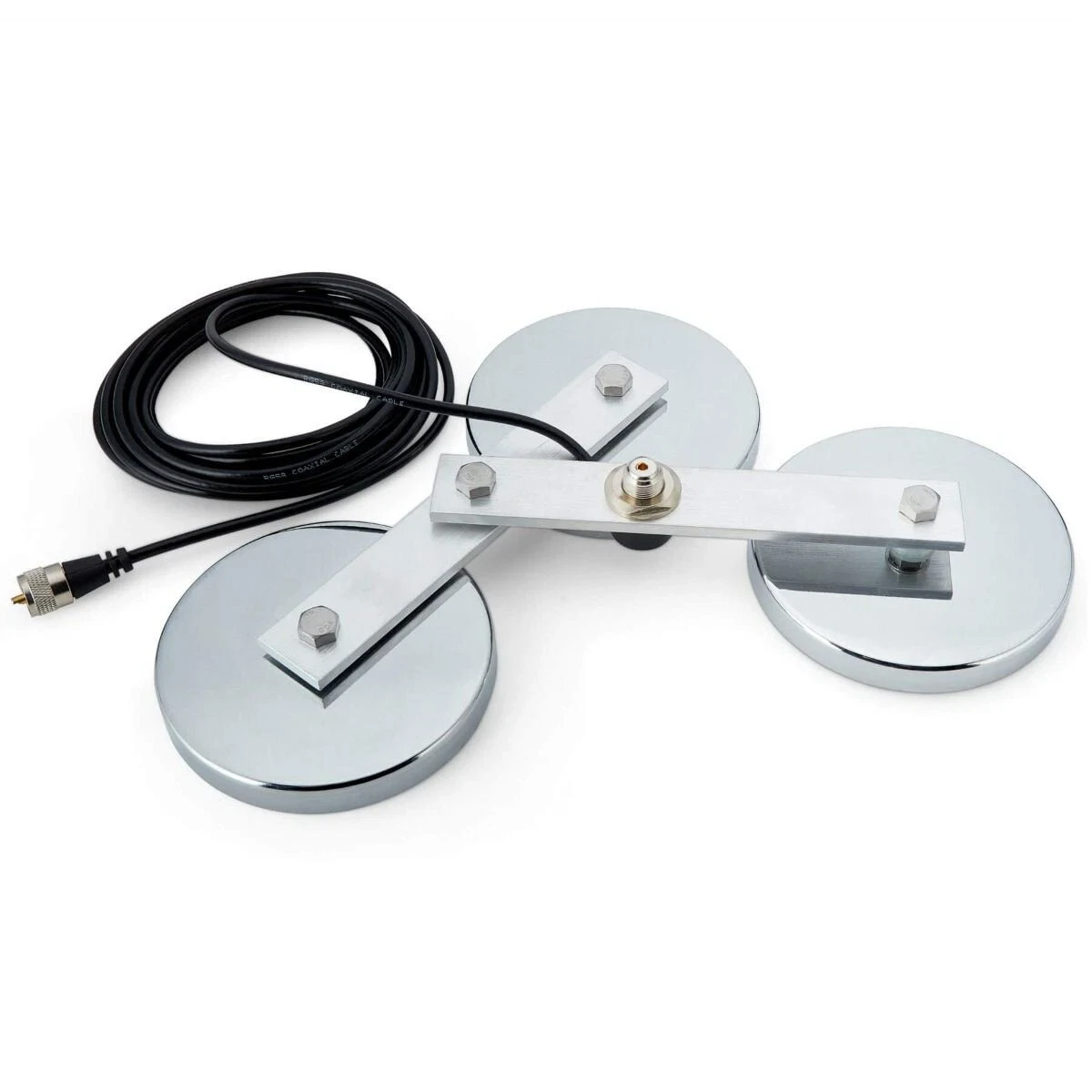
If you are using a mobile setup, the mounting position is especially important. A roof-mounted antenna on a good metal surface will usually have a better ground plane than an antenna mounted on plastic trim, a weak bracket or an isolated part of the vehicle.
For suitable mounting options, see our mobile CB antenna mounts.
If you are using a magnetic base and wondering why the panel underneath it matters so much, our explanation of how a mag mount antenna works covers the way the magnet forms a ground plane through the bodywork.
Can High SWR Damage a CB Radio?
Yes, transmitting with a very high SWR can potentially damage a CB radio, especially if the radio is used for extended transmissions. The risk comes from power being reflected back toward the radio instead of being transmitted efficiently by the antenna.
If your SWR reading is very high, stop transmitting and investigate the issue. Check the antenna, mount, coax cable and connectors before trying again.
If you are unsure, it is better to ask for advice before using the radio regularly. A simple check can help avoid poor performance and possible equipment damage.
Should You Tune Every New CB Antenna?
Yes. Even if an antenna is sold as pre-tuned or ready to use, the final SWR depends on the vehicle, mount position, ground plane, coax cable and installation. The same antenna can give different readings on different vehicles.
You should check SWR when:
- You install a new CB antenna.
- You move the antenna to a different position.
- You change the coax cable.
- You change the mount or bracket.
- You move the radio setup to another vehicle.
- You notice reduced range or poor performance.
Mobile CB Antenna Tuning Tips
For mobile CB setups, follow these practical tips:
- Test the antenna in an open area, away from buildings and large metal objects.
- Keep doors closed during testing if possible.
- Make sure the antenna mount is tight and stable.
- Check that the coax cable is not crushed or sharply bent.
- Keep connectors clean and properly tightened.
- Adjust the antenna gradually and recheck after each change.
If you are still getting high SWR after careful tuning, the issue may not be antenna length. It may be a ground, cable or mounting problem.
Cab installations have their own constraints, and our guide to fitting a CB radio in an HGV cab covers mirror arm brackets and the 12V and 24V supply question.
Base Station Antenna Tuning Tips
Base station CB antenna setups also need SWR checks. For fixed installations, antenna height, mounting location, nearby metalwork, coax quality and weatherproofing can all affect performance.
If a base antenna shows high SWR, inspect the connectors, coax cable, mounting hardware and antenna assembly carefully. Water ingress or a damaged connector can cause problems even if the antenna was previously working well.
Height, mast, radials and the length of the cable run all shape the reading you get at home, and our guide to setting up a CB base station antenna goes through each of them in turn.
SWR Meter vs Built-In Radio Meter
Some CB radios include a built-in SWR meter or antenna warning function. This can be useful, but an external SWR meter is often preferred for installation and tuning because it gives a clearer and more practical reading during setup.
For new installations, a dedicated SWR meter is a useful tool to keep with your CB equipment. It can help with future antenna changes, troubleshooting and vehicle moves.
Final SWR Checklist
Before using your CB radio regularly, check the following:
- The antenna is fitted securely.
- The mount has a suitable ground connection.
- The coax cable is not damaged.
- All connectors are tight.
- The SWR has been checked on low, middle and high channels.
- The SWR reading is within a safe range.
- The radio transmits and receives clearly.
Final Advice
SWR tuning is not just a technical detail. It is a key part of building a reliable CB radio setup. A properly tuned antenna system can improve range, reduce signal problems and help protect your radio.
If you are installing a new antenna, replacing a cable or setting up a CB radio in a different vehicle, take the time to check the SWR before regular use.
Complete Your CB Setup
Need the right tools for your installation? Browse our SWR meters, antennas, coax cables and mounting accessories, or contact GGD Electronics for practical advice.
Shop SWR Meters Shop Mobile CB Antennas Shop Coax Cables Contact Us