
How to Choose the Right CB Antenna for Your Vehicle
Published 16 May 2026. Last updated 26 September 2026.
The right CB antenna for a vehicle is the one that suits your vehicle and its mounting position, fitted on a solid metal ground plane and tuned with an SWR meter once installed. Antenna size, mount type, the coax run and that final tuning decide your range far more than the radio does.
Choosing the right CB antenna for vehicle use is one of the most important decisions when building a reliable mobile CB radio setup. Many people focus first on the radio, but in real-world use the antenna, mount, coax cable and tuning often make the biggest difference to signal strength, range and clarity.
Whether you drive a truck, van, 4×4, camper or everyday vehicle, the right antenna setup can help you get more consistent communication on the road. This guide explains what to look for before buying, how different antenna types work and which accessories you may need for a complete installation.
Browse our main categories: mobile CB antennas, antenna mounts, coax cables, SWR meters and CB radios.
Why the CB Antenna Matters
A CB radio can only perform as well as the antenna system connected to it. A poor antenna position, weak mount, damaged coax cable or high SWR reading can reduce your usable range and make communication unreliable.
The antenna is responsible for transmitting and receiving the signal. For mobile use, it also has to deal with vibration, weather, movement and different vehicle body types. That is why choosing the correct antenna is not just about buying the longest or most expensive option; it is about matching the antenna to your vehicle and how you use your radio.
Mobile CB Antenna vs Base CB Antenna
For a vehicle, you need a mobile CB antenna. These are designed to be fitted to cars, vans, trucks, 4x4s and other vehicles. They are usually installed using a magnetic mount, mirror mount, gutter mount, body mount or another vehicle-specific bracket.
A base CB antenna is different. It is designed for fixed locations such as a home, workshop, farm, office or radio room. Base antennas are usually larger and mounted higher, often on a pole or mast.
If you are building a setup for driving, start with our mobile CB antennas. For a fixed installation, look for base or homebase antenna options if available in your catalogue.
Fixed installations follow different rules on height, mast, radials and cable length, which we cover in our guide to setting up a CB base station antenna at home.
Choose the Right Mount for Your Vehicle
The antenna mount is just as important as the antenna itself. A strong, stable mount keeps the antenna secure and helps the whole system work properly.
Magnetic Mounts
Magnetic mounts are popular because they are quick to install and do not require drilling. They are often used on cars, vans and temporary setups. The best position is usually on a large, flat metal surface such as the centre of the roof, where the antenna has a better surrounding ground plane.

The magnet itself is part of the electrical picture, not only the mechanical one, as explained in our guide to how a mag mount antenna works.
Mirror Mounts
Mirror mounts are commonly used on trucks and commercial vehicles. They can be practical when roof mounting is not possible, but the quality of grounding and the strength of the mounting point are very important.
Fixed Body Mounts
Fixed mounts are more permanent and usually provide a stronger installation. They can be a good choice for regular CB users, off-road vehicles and work vehicles where reliability matters more than easy removal.
You can view suitable options in our mobile CB antenna mounts category.
Antenna Length: Short, Medium or Long?
In general, longer CB antennas tend to perform better than very short antennas, because they are more efficient at transmitting and receiving on the CB band. However, the best choice also depends on your vehicle height, where the antenna will be fitted and how practical it is for everyday use.
Length is only one of the things that decide how far you are heard, so it helps to read what sets the real range of a 27 MHz CB radio before you settle on a size.
Short Antennas
Short antennas are compact and easier to live with on vehicles that enter car parks, garages or height-restricted areas. They are convenient, but they may not offer the same performance as a longer antenna.
Medium Antennas
Medium antennas are a good balance for many users. They offer practical performance without being too difficult to mount or manage on a daily vehicle.
Long Antennas
Longer antennas are often preferred by users who want better range, especially on trucks, off-road vehicles or vehicles used in open areas. They need a solid mount and enough clearance to be used safely.
Ground Plane: Why Vehicle Bodywork Matters
Many mobile CB antennas depend on the metal body of the vehicle to work correctly. This is commonly known as the ground plane. A good ground plane helps the antenna radiate the signal more efficiently.
A metal roof usually provides a better mounting surface than a small bracket on plastic trim. Vehicles with little metal bodywork, roof racks, fibreglass panels or unusual mounting positions may need extra attention when choosing the antenna and mount.
If the antenna system has a poor ground plane, performance can suffer and the SWR reading may be too high. This is why proper installation and testing are important before regular use.
Do Not Ignore the Coax Cable
The coax cable connects the radio to the antenna. A damaged, crushed, badly routed or low-quality cable can cause signal loss and unreliable performance.
When installing a CB antenna, avoid sharp bends, trapped cable, damaged connectors and loose plugs. Make sure the cable length and connector type are suitable for your radio and antenna mount.
If you need replacement cables or connectors, browse our coax cables category.
Cable type matters as well as condition, and our comparison of RG58, Mini8 and RG213 coax for CB radio shows how much signal each one loses over a given length.
Why SWR Tuning Is Important
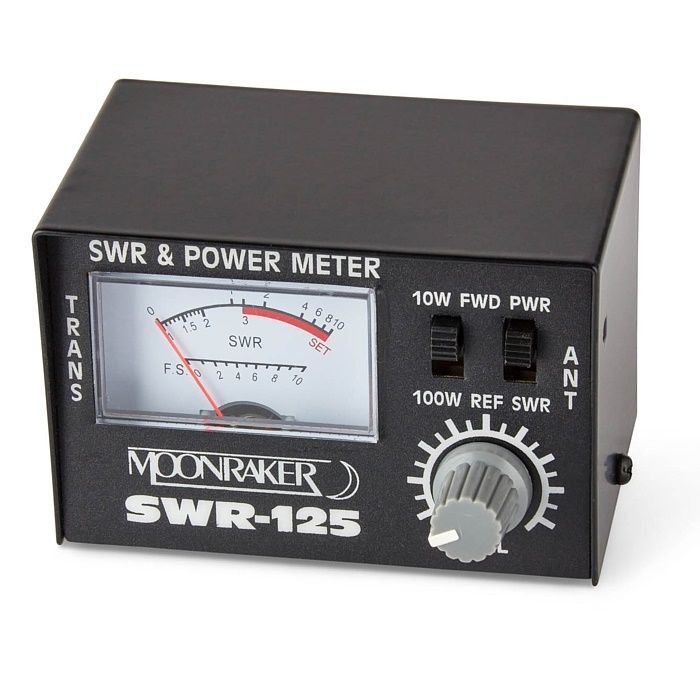
SWR, or Standing Wave Ratio, shows how well a CB antenna system is matched to the radio. A poor reading means more power is being reflected back instead of being transmitted efficiently, which reduces usable range, and a poor ground plane is one common cause. Check and adjust SWR with an SWR meter before regular use, because a properly tuned system performs better and helps protect the radio.
SWR stands for Standing Wave Ratio. In simple terms, it helps show how well your antenna system is matched to your CB radio. A poor SWR reading means more power is being reflected back instead of being transmitted efficiently.
Before using a new antenna setup regularly, it is good practice to check and adjust the SWR with an SWR meter. A properly tuned antenna system can improve performance and help protect your radio.
You can find suitable tools in our SWR meters category.
Recommended Setup for Truck Drivers
Truck drivers usually need a strong, practical installation that can handle long hours on the road. A durable mobile CB antenna, mirror mount or suitable bracket, good coax cable and SWR meter are often the key parts of a dependable setup.
For trucks, pay close attention to mounting strength, cable routing and grounding. A badly fitted antenna can move, loosen or perform poorly over time.
Cab wiring and voltage are part of the job too, so see our guide to fitting a CB radio in a truck on 12V or 24V.
Recommended Setup for 4×4 and Off-Road Vehicles
Off-road users need equipment that can handle vibration, mud, weather and movement. A strong antenna mount is especially important. Depending on the vehicle, a fixed mount or heavy-duty bracket may be a better choice than a temporary magnetic mount.
If the vehicle has roof racks, bars or limited metal bodywork, the antenna position and grounding should be checked carefully.
Recommended Setup for Everyday Vehicle Use
For everyday cars and vans, a magnetic mount with a suitable mobile CB antenna can be a practical choice. It is easy to install, easy to remove and suitable for many casual or occasional CB users.
For best results, place the antenna as high and central as possible on a suitable metal surface, then check the SWR before regular use.
CB Antenna Buying Checklist
Before buying a CB antenna for your vehicle, check the following:
- Your vehicle type: car, van, truck, 4×4, camper or work vehicle.
- Where the antenna can be safely mounted.
- Whether you need a magnetic, mirror, gutter or fixed mount.
- How much antenna height is practical for your driving.
- Whether your vehicle provides a good ground plane.
- Which coax cable and connector type you need.
- Whether you have an SWR meter to tune the antenna correctly.
Final Advice
The best CB antenna for vehicle use is the one that fits your vehicle, mounting position and communication needs. A well-installed medium antenna can often perform better than a poorly mounted longer antenna.
Focus on the complete system: antenna, mount, coax cable, grounding and SWR tuning. When all of these parts work together, your CB radio setup will be more reliable and easier to use.
Build Your CB Antenna Setup
Need the right parts for your vehicle? Browse our CB radio equipment categories or contact GGD Electronics for practical advice.